Thursday, October 20, 2011

Bright Washout

Some friends asked me to be on a review panel this week.  They lead an institute for people who are preparing to be missionaries and leaving the country within 6 months.  One of their team building tasks was to design a project for an existing outreach ministry of the church that was hosting their training.


The team had limited knowledge of the community.  They had limited exposure and information of the ministry, and limited connections to the people leading the effort (my wife and her friend).  

The participants in the experience did some quick research online, made a few calls, and explored some possibilities. 

What resulted was an out of the box opportunity for a new project.  It provided opportunities for people serve others by giving, by doing, by interacting.  It provided opportunities for families, individuals, and small groups.  It provided opportunities for both long term and one shot volunteer experiences.  It still needs some work – but the presentation sparked a potentially great outreach for the church to meet needs in its community.

Sometimes our own perceived “brightness” or expertise in an area washes out the color and richness of new ideas.  We fail to engage someone from the outside for new colorful thoughts.  We quickly discount others who don’t know anything about what we are trying to do or don’t know anything about a product, service, or task.  And we end up doing something similar – the same way – with a strangely identical result.  Just like an overexposed photo we became too bright to see the richness of new colors.

Need an idea?  Be bold and ask someone from different area or expertise for their thoughts - or task an unrelated team for a solution.  You just might find inspiration when it all comes into view.

Sunday, October 9, 2011

Questions for Success


I was recently driving back from a meeting in another state.  This was my first trip driving this route.   I knew what highway number I was looking for (I thought) and approximately where it was.  I was thinking about the things I had to get done when I got back to the office in the afternoon when it dawned on me that things did not look familiar compared with the drive down earlier in the week.

I pulled off and turned on the GPS function on my phone.  WOW.  Somehow I had overshot the transition exit by a half hour.

After looking at my directions and revisiting the drive in my mind, I realized I had made three mistakes.  First, I was looking for an exit not a transitional merge.  Second, I was looking for the wrong highway number. Third, I was distracted by other traffic and scenery and stayed on the wrong side of the split.  The end result was a mistake that added over an hour to the trip.

In a world of constant change it is important for leaders to know where they are going and what the signs are for success.
  • Do you have the right expectations looking ahead?
  • Are you looking for the right markers for success?
  • Are you paying enough attention to the present?
  • Are you engaging others for their observations and feedback?

If we can answer these questions positively as we make important (and some less important) decisions, we can reduce the risk of making a costly error.

King Solomon had similar advice for success - My son, do not lose sight of these—keep sound wisdom and discretion, and they will be life for your soul and adornment for your neck. Then you will walk on your way securely, and your foot will not stumble.”  (Proverb 3:21-24)

Tuesday, October 4, 2011

Love Questions


We all want our teams to succeed.  We think we are giving them what they need to succeed. We share our knowledge thinking our experiences should be absorbed as the way to success.  We smile as we think to ourselves – “I gave them everything the need.”  

But then the first question comes…the second question comes…the third question follows.  You have two ways to respond:  “Don’t think about it – just do what I told you” or “Let’s talk about it – what part are you wrestling with or want to learn more”.

Do questions indicate you failed?

Absolutely not!  You have sparked critical thinking.  The information is challenging a prior perspective or prior knowledge.  There is engagement with the material you shared and it is being processed. There is desire to be successful and apply new knowledge.

The Gallup organization studies employee engagement.  Their recent work has shown that less than 30% of the workforce is engaged in the workplace and more than 70% is either not engaged or actively disengaged and acting out their disengagement.

I would venture to guess that our most engaged team members are the ones that ask questions, desire clarifications, and share their thoughts – they feel a deep connection to their work and are passionate about what they do.  They are striving to be successful and are providing you with a great opportunity.  You get to deepen your beliefs and water the ground that will grow critical thinkers to strengthen your organization.

Welcome, embrace, and celebrate questions – someone is listening.


Monday, September 26, 2011

Improvement or Innovation?


Saw a thought provoking comment from Matt Bloom on the idea of innovation.  Matt is the Associate Professor of Management at Mendoza College of Business at Notre Dame.
"Innovation is about thinking differently about those very things we know well that are deeply habitual in our lives (or company) and then dramatically changing them.  So part of innovation begins with a caveat. Innovation leads to radical change. Do we want to make radical change? If not, then let’s just improve things….You hope to have radical change, but you really aren’t ready to embrace this idea of thinking differently….So you’re better off just trying to improve what you’ve got.”
This is where leadership has a big challenge.  Many leaders are in their role because what they have done or tried has worked well and they want to duplicate the success.  We might tell our teams that we want them to be creative – but put too tight of restrictions on them to allow new ideas to transform the situation.  We frustrate our team giving the illusion of openness when we really already have in mind what we want.  A much more positive environment may be created by asking our teams for improvements to the process or idea instead of innovative solutions.

I think it also ties into the clear vision and expectations we share with our team.  The continuous improvement model is built on incremental changes that enhance existing services, products, and models.  We need to support and encourage ideas that improve what we already have.  The innovation model requires thinking differently at a high level and being prepared to take calculated and sustainable risks – even when it might challenge our own prior innovation.  Our teams need to know the expectation in advance.

Both models are valid and can claim successes – and we can also find times they were utilized in the wrong situation.  The key is knowing which one to communicate to your team to keep them engaged, focused, and on the right task.

What is your comfort level and what does your organization need – improvement or innovation?  How are you going to communicate the need? 

Sunday, September 18, 2011

High Speed Trust

My favorite event to watch in the various bike races is the team time trial.  It takes what is typically seen as an individual sport and turns it into a team race against the clock.  All nine riders start at the same time and quickly form a line of riders with each rider taking turns at the front while the rest of the team drafts behind.  It allows each rider to take advantage of the slipstream in front of them to conserve energy and recover from leading the team.  The space between each biker can be inches to maximize the draft.  

It’s a great example of a high performing team.  And it only happens with complete trust.
·        Whoever is in the front has to be able to pick the line to take on road with minimal bumps and debris.  The team members behind have to trust that whoever is in the front will lead them in the safest and fastest line.
·        The riders are within inches of each other in the race against the clock.  They have to trust that the person in front of them is maintaining a consistent speed and cognizant of what the next rider is doing.  A lack of concentration for a split second can end in disaster with a pile up of bikes, a spin out, or a break in the line.
·        There has to be complete trust that everyone on the team is giving 100% at the front through the entire ride to maximize the potential of the line.  There will be a chance to recover as leadership rotates to the front.

Similarly, our teams have to have a solid foundation of trust to be successful long term. Each person needs to know their leader is going to do what he/she can do to remove obstacles to be successful.  The individuals need to know that their team members are watching out for them and will share their strengths when needed.  The team needs to know the vision and plan to get them to the finish line.
·        Have conversations with your team about obstacles to success.  Ask them what you can do to help them be successful.
·        Create the opportunity for each person on your team to share what they do best – we assume what it is sometimes by experience, but it is important for each individual to share it.  You might learn something new and uncover a talent gone into hiding.
·        Communicate.  Tell people where you are going and how you see your team getting there.  Don’t make them guess.
·        Give each team member opportunities to lead various projects.  It builds your team and also gives you a chance to recover from hectic times.

Thursday, September 8, 2011

What's Your Cause?

What do you do?  Not just the title bestowed on you by the HR department, but what do you do? 

Jason Jennings puts it well - Great leaders turn what they do into a noble cause and purpose.  It’s beyond the financial impact.  They are able to state what they do in such a way that it inspires action in themselves and others – and they act in such a way that it is about more than the bottom line or themselves.  They have framed their work in a way that it is tied to improving the quality life for their team or their customers – it’s an outward focus.

Those of us working in nonprofits may have an easier time defining our noble cause, but we are just as susceptible to losing sight of it in the middle of busyness as with any leader in any career.  The urgency of a budget, the crisis with the business plan, the HR issue that arrives without an appointment, or the personal issue that becomes a professional issue – they all have the power to derail the most passionate commitment from its cause driven perspective.

Three things help leaders stay connected to their noble cause and purpose.
  • Share your cause and purpose with others.  It creates understanding.  It creates accountability.  It creates support from others.  It cements it in your own beliefs and values.
  • Connect stories and situations to your cause.  Stories are emotional and illustrate the noble cause in a manner that helps people understand the cause even better.
  • Prioritize your time with activities and tasks that are most connected to your noble cause.  Spend the maximum time on those things that score highest on the alignment scale.  Block the time on the schedule for those things – turn down those things that are not connected.
These are not new things.  If you take a look at the life of Jesus in the Gospels, you will find that he did these three things.  He shared the cause of why he came and what his purpose was on earth -- and wasn’t shy about it.  He shared stories in parables that helped people understand the message better.  He prioritized his time and committed it to activities that were in sync with his cause.  Two thousand years later his actions are still changing lives and he is the model of a servant leader.

What is your noble cause?

Monday, September 5, 2011

Be Safe


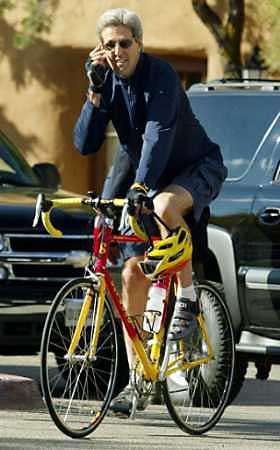
Time for a soapbox and a short detour….If you don’t wear a bike helmet when you ride its time to get one.

I grew up in a time when bike helmets really weren’t talked about or considered.  We did some pretty crazy stuff – and it is pretty incredible I didn’t spend anytime in an ER room or worse.  Plywood ramps on cinder blocks, jumping off the boat docks into the river, dirt trail rides through the woods through a variety of obstacles, riding on highways  – they all provided a lot of fun and we did it all without helmets. 

But now there are great lightweight helmets.  Statistics are published about bike accidents and fashion, denial, or apathy still take center stage.  I can sympathize with some of the adults that still live in the past with this – but its time to accept the fact that you are much safer with a helmet.  The cyclists that blow me away though, are the ones I have seen in the past couple of weeks that are just flat out…..well….stupid.
  • The rider that hangs the bike helmet off the handlebar by one strap and the other strap dangling and swinging right next to the front wheel asking to get hooked in the wheel. 
  • The rider that has it loosened to the point of sliding off the back of their head like a cowboy hat.  
  • The one that has it looped over their arm so it looks like a makeshift elbow guard.
  • The one that has it strapped on their pack rack. 
  • The parent with a bike helmet on and the child in the bike seat without.
Be a leader that will lead another day and lead by example.  It is more than a good idea and the kids are watching.  Put the helmet on – it’s fashionable, it’s cool, and more importantly you will be able to make a difference a little longer.